
Buy Now or Wait? A Practical Framework for Australian Property Buyers in 2026
“Should I buy property now or wait?” sounds like a simple question. In 2026, it is anything but simple.
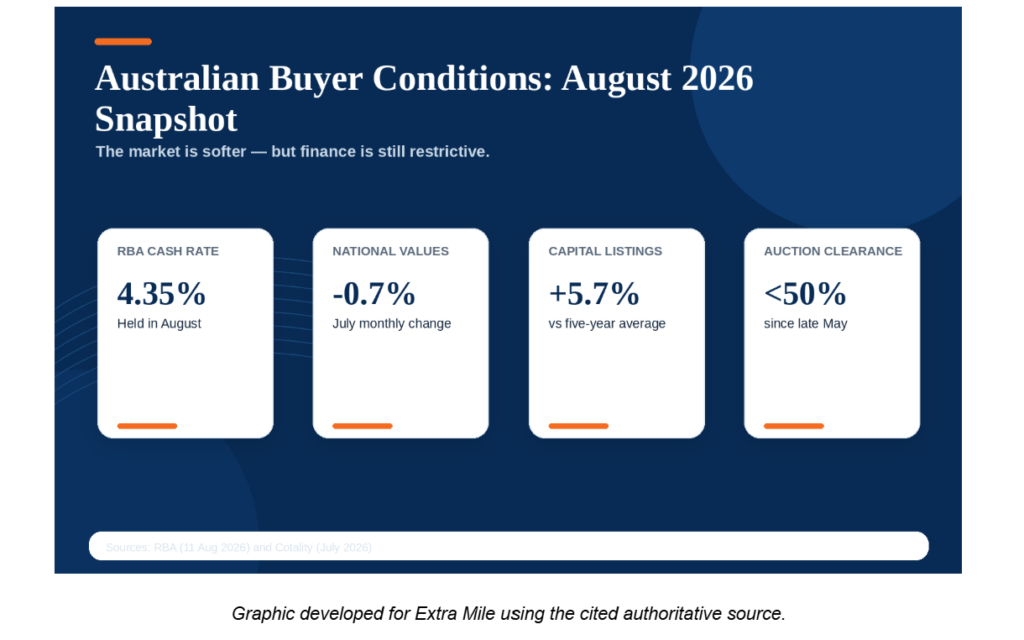
Australian property values are falling, the RBA cash rate is 4.35%, borrowing capacity is under pressure and buyers have more property to choose from than they did earlier in the cycle.
Waiting can feel like the safe option. But waiting is also a financial decision — with its own costs, risks and assumptions.
Start with Why You Are Buying Property — Not Where You Think Prices Are Going
A person buying a long-term family home should not use exactly the same framework as a property investor. If you expect to live in a home for ten or fifteen years, a short-term fall in value may matter less than whether the property suits your needs and the home loan remains affordable.
An investor needs to consider rent, yield, finance, tax, risk, holding period and exit strategy. The purpose of the purchase determines which variables matter most.
Can You Comfortably Afford the Home Loan Today?
This question should come before any property forecast. APRA requires regulated banks to assess new mortgage borrowers using a minimum 3 percentage-point serviceability buffer above the loan rate.
That rule is designed to create resilience, but lender approval is not the same thing as personal comfort. The bank may approve an amount that you decide is too high for the lifestyle and financial flexibility you want.
If you want to understand the serviceability rule in more detail, read APRA’s current macroprudential settings.
If You Are Waiting, Define Exactly What You Are Waiting For
A good waiting strategy has a trigger. A vague one simply becomes indecision.
- Are you waiting for a larger deposit?
- A lower home loan rate?
- A specific 5% fall in property prices?
- More job security or higher income?
- More suitable stock in a particular suburb?
For example: “When our deposit reaches $100,000 and repayments on the type of property we want stay below our chosen monthly limit, we will start actively bidding.” That is a real decision rule. “We will wait until the market feels better” is not.
A 5% Property Price Fall Does Not Equal a 5% Improvement in Affordability
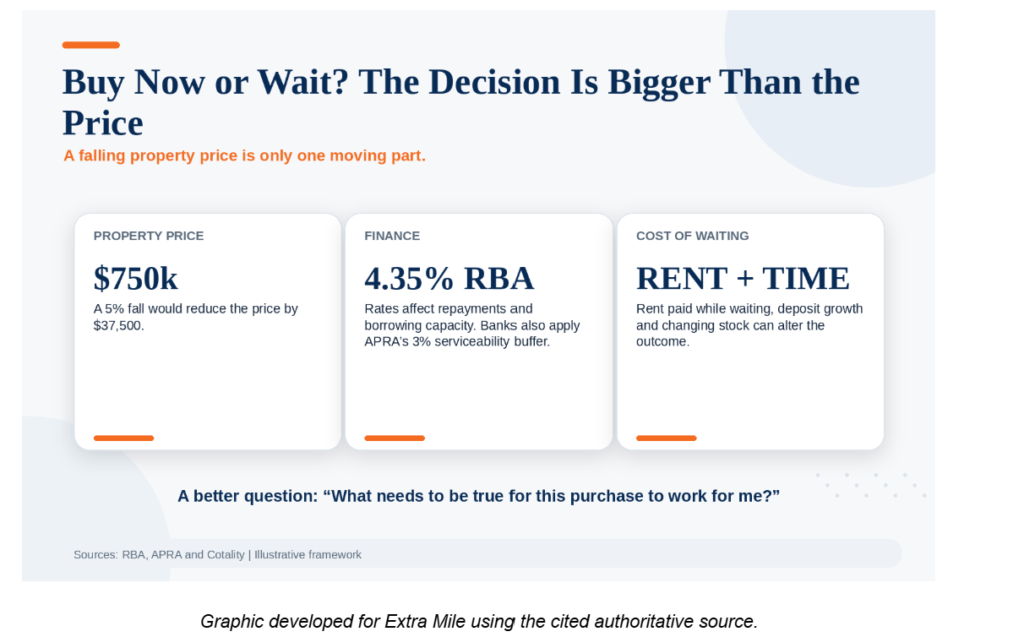
Imagine a property priced at $750,000. A 5% decline reduces the price by $37,500. That is meaningful.
But while you wait, your home loan interest rate, borrowing capacity, income, expenses, deposit and rental costs can all change. The property you actually want may also move differently from the national market.
It is completely possible for a property to become cheaper while your capacity to finance it also becomes weaker.
What Happens if You Buy and the Australian Property Market Falls Further?
This is the opposite stress test. Would you still be comfortable owning the home if its value was lower twelve months after settlement?
If the answer is no, the purchase may rely too heavily on short-term capital growth. Property is an illiquid asset with meaningful transaction costs. Your expected holding period matters.
The 2026 Property Market Is Giving Buyers More Time
Cotality reported national dwelling values fell 0.7% in July, while advertised supply across the combined capital cities moved to 5.7% above the five-year average. Capital-city auction clearance rates have been below 50% since late May.
That creates a useful middle ground between “buy immediately” and “stop looking”: get financially ready and become selective.
Our View at Extra Mile: Separate What You Can Control from What You Cannot
Our view at Extra Mile is that trying to identify the exact bottom of the property market is usually less useful than preparing for a range of outcomes.
You cannot control the RBA, national property prices, inflation or tax policy. You can control your deposit, debts, loan structure, preferred repayment level, property criteria and financial buffers.
That is the real value of preparation: not predicting the market, but being able to make a good decision when the right property is in front of you.
A Practical Buy-Now-or-Wait Checklist for Australian Home Buyers
- Do I know my realistic borrowing capacity rather than relying on an online calculator?
- Would the repayments remain comfortable if rates stayed high or rose?
- Do I have a clear reason for buying and a realistic holding period?
- If I wait, what exact condition will trigger me to act?
- Am I considering rent and opportunity cost while waiting?
- Can I tolerate a short-term fall in the property value?
- Do I have enough cash left after settlement for emergencies and ownership costs?
Thinking About Buying but Not Sure Whether You Are Ready?
Extra Mile can help you understand your borrowing position and what different purchase prices would mean for your repayments before you start making serious offers. You can also read our complete home loan guide for Adelaide buyers.